Halloween Starting Date: When Is Halloween 2026?
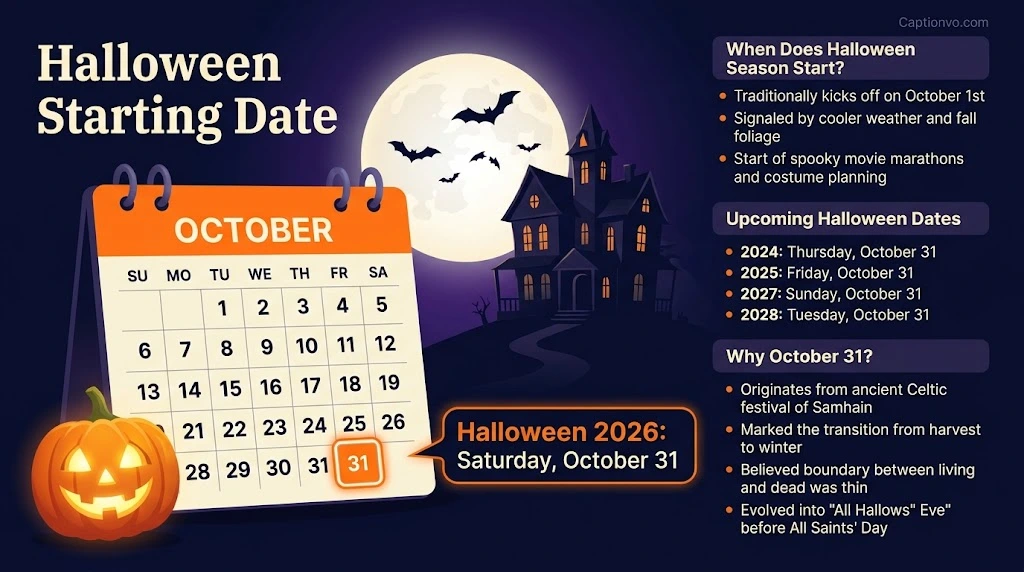
Wondering about the Halloween starting date? Halloween is celebrated every year on October 31, and in 2026, it falls on Saturday, October 31. The holiday is widely associated with costumes, trick-or-treating, pumpkin carving, spooky decorations, and themed parties.
Wondering about the Halloween starting date? Halloween is celebrated every year on October 31, and in 2026 it falls on Saturday, October 31. But the holiday date is not the same as the start of Halloween season. Decorations, costume shopping, parties, and themed attractions may appear weeks earlier, depending on personal plans and local events. This guide gives you the exact 2026 date, a calendar of upcoming Halloweens, and practical answers about decorations, party timing, and the holiday’s origins. Whether you’re planning a celebration or simply checking your calendar, you’ll find the key details here quickly—without the spooky guesswork.
But when does Halloween season actually begin? There is no single official start date for seasonal decorations, Halloween parties, and themed attractions. Some people start preparing in September, while others wait until October.
In this guide, you’ll find the exact Halloween date, upcoming dates for 2027–2030, when to decorate, why Halloween is celebrated on October 31, and how to plan seasonal activities. Whether you’re checking a calendar or preparing content for social media, this guide will help you find the answer quickly.
1. What Is the Halloween Starting Date?
The Halloween starting date is October 31 every year. Halloween keeps the same calendar date, although the weekday changes from one year to the next.
Use these for calendar reminders, date announcements, and seasonal posts.
- Halloween has a date, and it’s October 31.
- Mark the calendar: spooky night is October 31.
- One date, a thousand spooky possibilities.
- Halloween is October 31. Let the countdown begin.
- Save the date for your favorite fright-filled night.
- October 31 belongs to the spooky side.
- Calendar checked, Halloween plans activated.
- Your annual reminder: Halloween is October 31.
- Circle the date and bring on the pumpkins.
- The countdown ends on October 31.
- One October date, unlimited Halloween energy.
- October 31 is calling. Are you ready?
- The date is fixed; the costume ideas are endless.
- A little reminder to keep October 31 free.
- Halloween starts with a date and ends with memories.
Halloween is also called All Hallows’ Eve, referring to the evening before All Saints’ Day on November 1 in the Western Christian calendar.
It’s useful to distinguish between three things:
- Halloween itself: October 31 every year.
- Halloween season: An informal period when decorations, shopping, and seasonal attractions begin.
- Halloween events: Parties, festivals, and neighborhood activities that organizers can schedule on different dates.
If your question is simply when Halloween starts, the answer is October 31. If you’re asking when to begin celebrating, the timing depends on the activity and your local community.
2. When Is Halloween 2026?
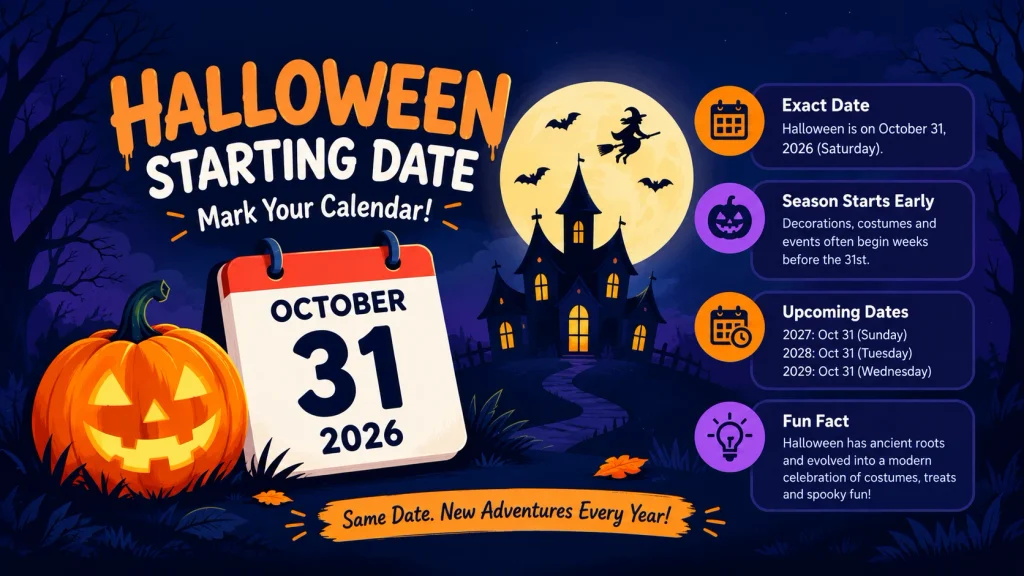
Halloween 2026 is on Saturday, October 31, 2026.
These focus on the current year’s Saturday, October 31 date.
- Halloween 2026 lands on Saturday. Weekend spooky plans? 🎃
- Saturday, October 31—let the Halloween countdown begin.
- Halloween 2026 is officially on my calendar.
- Saturday night is getting a little more haunted.
- October 31, 2026: the date for costumes and candy.
- A Saturday Halloween deserves an extra-special plan.
- Halloween weekend is calling. What’s your costume?
- Saturday, spooky lights, and a little Halloween magic.
- Halloween 2026: ready for tricks, treats, and memories.
- This year’s spooky date comes with weekend energy.
- October 31 falls on Saturday. Time to plan the fun.
- Weekend plans: a costume, a camera, and Halloween vibes.
- Saturday’s calendar entry looks a little spooky.
- Halloween 2026 is getting closer. Are you prepared?
- One Saturday, endless Halloween photo opportunities.
The Saturday date may make it easier for some families and friends to organize gatherings without a school or workday immediately following the evening. However, individual schools, workplaces, venues, and communities have their own schedules.
| Halloween detail | Answer |
| Year | 2026 |
| Date | October 31 |
| Day | Saturday |
| Month | October |
| Main activities | Costumes, pumpkin carving, parties, and trick-or-treating |
Planning a costume party? Start arranging supplies and invitations ahead of time. Planning a neighborhood activity? Check the official local schedule before announcing your event.
The important point is that Halloween’s date remains October 31, even when some celebrations are arranged for a different evening.
3. Halloween Dates for 2026–2030
Halloween always falls on October 31, but the weekday changes each year. The following calendar table provides the dates for planning future celebrations.
Helpful for annual calendars, scheduled content, and advance planning.
- Future plans start with the right date.
- October 31 is already booked for Halloween.
- Planning a year ahead? Start with the calendar.
- Same Halloween date, a different weekday each year.
- My annual reminder never changes: October 31.
- New year, same spooky date.
- Halloween planning looks better with a calendar.
- Five years of dates, countless costume ideas.
- Keep October 31 on your yearly checklist.
- A little calendar planning makes a big difference.
- Every year has its Halloween moment.
- The date stays fixed; the plans keep changing.
- Saving future Halloweens one calendar at a time.
- Future me will thank me for planning early.
- One date to remember, year after year.
| Year | Date | Day |
| 2026 | October 31, 2026 | Saturday |
| 2027 | October 31, 2027 | Sunday |
| 2028 | October 31, 2028 | Tuesday |
| 2029 | October 31, 2029 | Wednesday |
| 2030 | October 31, 2030 | Thursday |
These dates can help you plan parties, school activities, social media campaigns, seasonal promotions, and costume shopping.
Keep in mind that an event may take place on the weekend before Halloween or on another suitable date. The calendar date of the holiday does not automatically determine when every local activity will happen.
More to Explore: https://captionvo.com/what-is-a-social-caption/
4. Does Halloween Always Fall on October 31?
Yes. Halloween is observed on October 31 each year. Unlike holidays whose dates depend on a weekday or lunar calendar, its Gregorian calendar date stays fixed.
- Halloween stays on October 31, no calendar surprises.
- The weekday changes; Halloween’s date doesn’t.
- Every year, the same date and fresh spooky memories.
- October 31 is the constant in my Halloween plans.
- Fixed date, fresh costume.
- No need to guess the date—Halloween is October 31.
- Same spooky day, new ways to celebrate.
- Halloween’s date doesn’t move with the weekend.
- The calendar knows: October 31 is Halloween.
- Keep the date; change the costume.
- Your annual spooky reminder is always the same.
- Halloween on the calendar, magic in the air.
- The date is certain; the decorations are up to you.
- October 31 never needs a costume change.
- A reliable date for an unpredictable night.
Confusion often arises because people use the word “Halloween” to describe both the holiday and the broader season.
For example, a school may arrange a costume day on October 30, a town might organize a family event on the preceding weekend, and a theme park may host Halloween attractions throughout October.
Those are scheduled activities rather than changes to the holiday’s date.
Remember: Halloween is October 31, but celebrations related to Halloween can happen earlier or at different times according to local arrangements.
5. When Does Halloween Season Start?
Halloween season has no universal official start date. It is an informal term for the period when people begin decorating, shopping for costumes, enjoying spooky entertainment, and attending autumn events.
Many households begin decorating in early October, while late September may suit people who want to enjoy their displays for longer. A 2026 guide from Martha Stewart also describes early October as a common decorating period, with late September as another option.
- Is it too early for Halloween vibes? Never say never. 🎃
- The calendar says October, and my spooky mood agrees.
- Slowly trading summer energy for autumn magic.
- Halloween season starts when the pumpkins appear.
- A little autumn air, a little spooky flair.
- My favorite season has entered the chat.
- Spooky plans loading, one decoration at a time.
- The Halloween countdown is officially part of the mood.
- Autumn leaves and Halloween dreams.
- The season feels different when the pumpkins come out.
- Bringing spooky energy into the everyday.
- September plans, October magic.
- Halloween spirit: activated at my own pace.
- Cozy nights are getting a little creepier.
- No official season start—just the right spooky feeling.
Here is a practical planning guide:
| Period | Suggested activity |
| August–September | Research costume ideas and look for advance event announcements. |
| Late September | Begin planning decorations and seasonal activities. |
| Early October | Put up decorations and organize invitations. |
| Mid-October | Finalize costumes, supplies, and party details. |
| October 24–30 | Confirm local schedules and complete preparations. |
| October 31 | Halloween itself. |
This is a suggested timeline, not an official calendar. Some people start much earlier, while others celebrate only near the end of October.
For a website like Captionvo.com, the wider season can also be a useful time to publish Halloween captions, pumpkin captions, and spooky social media ideas.
6. When Should You Put Up Halloween Decorations?
There is no required date for putting up Halloween decorations. Early October is a practical choice for many homes, although some people begin in late September.
- My porch just entered its spooky era.
- A little pumpkin magic changes everything.
- Decorated for chills, thrills, and compliments.
- The cobwebs are decorative. Probably. 👻
- Orange lights, purple nights, perfect Halloween vibes.
- Turning ordinary corners into spooky scenes.
- Pumpkin placement is serious business.
- My home has officially joined the haunted house club.
- Spooky outside, cozy inside.
- The decorations said, “Let’s make October unforgettable.”
- Every corner deserves a little Halloween drama.
- Pumpkins first, questions later.
- My favorite home makeover has a spooky twist.
- Setting the scene for October 31.
- A little glow, a few pumpkins, and lots of Halloween spirit.
Popular decorations include carved pumpkins, jack-o’-lanterns, paper ghosts, bats, artificial cobwebs, skeletons, and orange or purple lights.
A simple approach is to put up reusable decorations in early October and add fresh pumpkins closer to October 31. This can help you spread out the work and keep your display looking attractive.
Before decorating outdoors, consider weather conditions, the security of hanging items, electrical safety, and clear walkways for children and visitors.
Your ideal start date will depend on your budget, available time, decorating style, and how long you want to enjoy the display.
More to Explore: https://captionvo.com/what-is-a-simple-caption/
7. When Do Halloween Parties and Events Start?
Halloween parties and themed events can take place before October 31. Costume contests, school activities, pumpkin festivals, haunted attractions, and community gatherings may be scheduled on different days throughout the autumn season.
- The guest list is ready; the spooky playlist is next.
- Costumes on, ordinary plans off.
- One invitation, a whole night of Halloween memories.
- The party doesn’t need a ghost story—it has us.
- Save your Saturday for a little spooky celebration.
- Where the costumes are extra and the memories are real.
- Planning a Halloween night worth remembering.
- The best plans include friends and a little fright.
- Meet me where the pumpkins glow.
- Good people, great costumes, spooky atmosphere.
- A Halloween party with a little extra magic.
- RSVP accepted by the spooky committee.
- From ordinary gathering to October highlight.
- The theme is Halloween; the energy is unforgettable.
- Every great party needs a little mystery.
Some activities last for one evening, while seasonal attractions may operate on several dates. There is no single event schedule that applies to every town or country.
To find reliable information, check local announcements, school notices, venue websites, community calendars, and official social media pages.
If you are organizing an event, make the invitation clear about the date, start time, venue, entry requirements, and any age restrictions.
For Halloween 2026, the holiday falls on Saturday, October 31. That may be convenient for weekend gatherings, but you should still confirm the actual timing of any event you plan to attend.
8. What Time Does Halloween Start on October 31?
Halloween has a fixed date, but it does not have one universal starting time. Different activities begin according to local customs and the schedules set by organizers.
A family event may begin in the afternoon, a costume party might start in the evening, and trick-or-treating hours can vary between neighborhoods.
- No Universal start time—just check the local plan.
- Evening plans are wearing their spooky outfits.
- Halloween timing depends on where the fun happens.
- Costumes ready before the night gets busy.
- The best time to plan is before the last minute.
- Check the schedule, then bring the spooky energy.
- My Halloween reminder: date first, time confirmed.
- Party time is whatever the invitation says.
- A planned night is a less stressful night.
- The countdown is fun; checking the schedule is smart.
- The clock is ticking toward October 31.
- Set the time, choose the costume, enjoy the night.
- Not every neighborhood follows the same trick-or-treat hours.
- Spooky plans work best with clear timing.
- Date confirmed, start time checked, Halloween ready.
| Question | Answer |
| What date is Halloween? | October 31 |
| Is there one official worldwide start time? | No |
| When does trick-or-treating begin? | According to local arrangements |
| Can a party happen before October 31? | Yes |
If you are taking children trick-or-treating, check the local schedule and follow community safety advice. If you’re organizing a party, clearly communicate the start and finish times so guests can plan accordingly.

9. Why Is Halloween Celebrated on October 31?
Halloween is associated with All Hallows’ Eve, the evening before All Saints’ Day on November
- October 31 has centuries of stories behind it.
- One date, a fascinating mix of traditions.
- Halloween’s calendar story is older than my costume collection.
- All Hallows’ Eve gives October 31 its historical connection.
- A spooky night with a long cultural history.
- Not just pumpkins—there’s history behind the holiday.
- October 31, where tradition meets modern celebration.
- A date shaped by history and changing customs.
- The story of Halloween goes beyond candy and costumes.
- Ancient traditions, modern Halloween memories.
- One evening, many layers of history.
- The past meets the pumpkin patch every October.
- Halloween’s story is as interesting as its costumes.
- Every tradition has a story worth learning.
- Behind the spooky fun is a history worth exploring.
Its historical background also includes connections with Samhain, an ancient Celtic seasonal festival marking a transition associated with the end of the harvest and the beginning of winter. The Library of Congress describes how customs associated with Samhain and Christian observances contributed to Halloween traditions over time.
Over the centuries, these traditions evolved, while regional folklore and changing cultural practices influenced the way people observed Halloween.
Today, familiar customs include costumes, trick-or-treating, pumpkin carving, themed decorations, and community gatherings.
Halloween’s origins are best understood as a complex historical development rather than the result of only one event or tradition.
10. What Is the History and Origin of Halloween?
Halloween’s history reflects a combination of seasonal traditions, Christian observances, folklore, and later cultural developments.
Samhain is an important part of the historical discussion because of its associations with the end of the harvest and the transition into winter. Christian observances connected with All Saints’ Day also influenced Halloween’s name and calendar placement.
- A little history makes Halloween even more interesting.
- From old seasonal customs to modern spooky fun.
- Today’s costumes carry yesterday’s stories.
- Halloween history deserves more than a quick glance.
- From Samhain connections to present-day celebrations.
- Folklore, traditions, and one unforgettable October night.
- The oldest stories still inspire new Halloween ideas.
- More than a holiday—it’s a tradition that evolved.
- Learning the past behind the pumpkin.
- A spooky tradition with a layered history.
- Halloween changed across generations, and so did the fun.
- History and folklore make this season richer.
- Every jack-o’-lantern has a story worth discovering.
- The past never looked quite so spooky.
- Discover the history behind your favorite October tradition.
The holiday continued to develop as people carried customs between communities and countries. Practices involving costumes, lanterns, gatherings, and treats became part of different Halloween traditions over time.
Modern celebrations can look very different from one place to another. Some communities emphasize family-friendly activities, while others focus on parties, themed entertainment, or the holiday’s cultural and historical significance.
For a more detailed history, readers can explore the Library of Congress’s Halloween resources and HISTORY’s guide to Halloween.
11. What Are the Most Popular Halloween Traditions?
Halloween is associated with several popular activities, although not every community observes them in the same way.
Costumes: Children and adults dress as spooky characters, animals, fictional heroes, or original creations.
Trick-or-treating: Children visit participating homes to ask for treats, following the arrangements used in their community.
Jack-o’-lanterns: People carve pumpkins into faces or other designs, often placing lights inside them.
Halloween parties: Friends and families organize themed gatherings, costume contests, games, music, and seasonal food.
Spooky decorations: Homes, classrooms, shops, and event venues display ghosts, bats, skeletons, cobwebs, and other Halloween-themed objects.
Seasonal entertainment: People watch horror films, visit attractions, carve pumpkins, and share festive photos online.
- Costume ready, pumpkin glowing, Halloween mood complete.
- Trick-or-treat memories are made one doorstep at a time.
- Pumpkin carving: where creativity meets a little chaos.
- My costume has entered its main-character era.
- Candy, costumes, and unforgettable October moments.
- One pumpkin, endless design possibilities.
- Haunted attractions and happy screams.
- The traditional Halloween photo is officially taken.
- Dressing up is an art, and October is the gallery.
- Every costume tells a different story.
- A night full of treats and tiny surprises.
- From pumpkin seeds to pumpkin art.
- Spooky films and cozy blankets are my tradition.
- New Halloween memories, familiar seasonal magic.
- The best traditions are the ones we look forward to.
For Captionvo readers, Halloween is also an opportunity to prepare social media posts about costumes, decorations, parties, and pumpkin-carving projects. Dedicated caption articles can help readers find wording that fits their photos and audience.
More to Explore: https://captionvo.com/what-is-a-vibe-caption/
12. Is Halloween a Public Holiday in the United States?
No. Halloween is not a US federal public holiday. Time and Date lists it as an observance and notes that businesses generally follow their normal opening hours.
- Halloween is an observance, so check your local schedule.
- A spooky date doesn’t automatically mean a day off.
- Plans on the calendar, work schedule checked.
- Halloween fun can happen around an ordinary workday.
- Check the opening hours before heading out.
- A holiday mood, with a practical calendar check.
- Don’t assume every school or office closes on October 31.
- The date is fixed; business hours depend on the institution.
- Halloween plans work best when the schedule is confirmed.
- A calendar reminder isn’t the same as a public holiday.
- Weekend timing makes this year’s plans interesting.
- Work first, costume later—or plan a day off if available.
- Check the venue hours before you leave home.
- A little schedule check saves a lot of confusion.
- Halloween is on the calendar; your day off is another question.
However, a specific school, employer, shop, or organization may make its own arrangements.
| Institution | What to check |
| Government offices | Published opening schedule |
| Schools | School or district calendar |
| Banks and shops | Individual business hours |
| Workplaces | Employer policies |
| Local attractions | Official event announcements |
Halloween’s popularity does not mean that every institution closes for the day.
Its recognition and the way people celebrate also vary internationally, so readers outside the United States should check local information relevant to their area.
13. What Is the Difference Between Halloween, All Saints’ Day, and Día de los Muertos?
Halloween, All Saints’ Day, and Día de los Muertos occur close together on the calendar, but they are different observances with distinct histories and meanings.
- Different dates, different traditions, shared respect.
- Halloween has its own story, and so do other observances.
- Learning the differences makes celebrations more meaningful.
- Respect the history behind every cultural tradition.
- October ends with stories worth understanding.
- All Saints’ Day and Halloween are related, but not identical.
- Día de los Muertos deserves its own cultural context.
- Different customs can share the same calendar season.
- Celebrate thoughtfully and learn something new.
- Curiosity and respect belong in every cultural conversation.
- A calendar can hold many different traditions.
- Same season, distinct meanings.
- Understanding is better than treating every holiday as the same.
- History connects some observances without erasing their differences.
- Learn the tradition, appreciate the meaning, share with respect.
| Observance | Common date | Main association |
| Halloween | October 31 | Costumes, trick-or-treating, parties, and seasonal traditions |
| All Saints’ Day | November 1 | Christian observance honoring saints |
| Día de los Muertos | November 1–2 | Mexican and Mexican-influenced traditions remembering deceased loved ones |
Halloween is closely connected to All Hallows’ Eve, the evening before All Saints’ Day. Día de los Muertos has a different cultural history and includes practices such as family gatherings, memorial offerings, and ofrendas.
These observances should not be treated as interchangeable. Understanding the distinction helps readers recognize their individual cultural and religious significance.

14. How Can You Prepare for Halloween and Trick-or-Treating?
Preparing early can make Halloween more Enjoyable and Reduce last-minute problems. Whether you are arranging a party or planning a family activity, a little organization goes a long way.
Use this checklist:
- Costume checked, route planned, treats ready.
- Halloween prep is a little checklist and a lot of excitement.
- The best spooky nights begin with smart planning.
- Costumes ready before the last-minute scramble.
- Clear paths, glowing lights, happy Halloween memories.
- Checking the local schedule before heading out.
- A little preparation keeps the fun on track.
- Pumpkin, costume, camera—almost ready.
- The plan is simple: stay safe and enjoy the night.
- Invitations sent, decorations up, Halloween approaching.
- Comfortable costume, visible details, confident plans.
- Treats packed and the evening mapped out.
- The countdown is short; the checklist is useful.
- Good memories begin with thoughtful preparation.
- Ready for October 31, one little task at a time.
For trick-or-treating, safe routes and awareness of traffic are important considerations. For party organizers, clear invitations should include the date, time, location, and any entry requirements.
Finally, confirm your plans for October 31. Halloween’s calendar date is fixed, but the schedule for an individual celebration may differ.
15. People Also Ask
A: Halloween takes place every year on October 31.
A: Halloween falls on Saturday, October 31, 2026.
A: No. Halloween itself takes place on October 31. The wider Halloween season may begin earlier, depending on local customs and personal preferences.
A: Early October is a practical choice for many households, while some people begin in late September. There is no mandatory decorating date.
A: No. Halloween itself is dated October 31, but related parties and community events may take place on other dates.
Conclusion
The Halloween starting date is October 31 every year, and in 2026 it falls on Saturday. The broader Halloween season has no official starting date, while decorations, parties, and community events follow individual preferences and local schedules.
For the most useful reader experience, keep the date answer at the beginning, include the calendar table, and use reliable historical sources. Readers planning events should check local arrangements before making bookings.










2 thoughts on “Halloween 2026: 5 Things to Know About October 31”